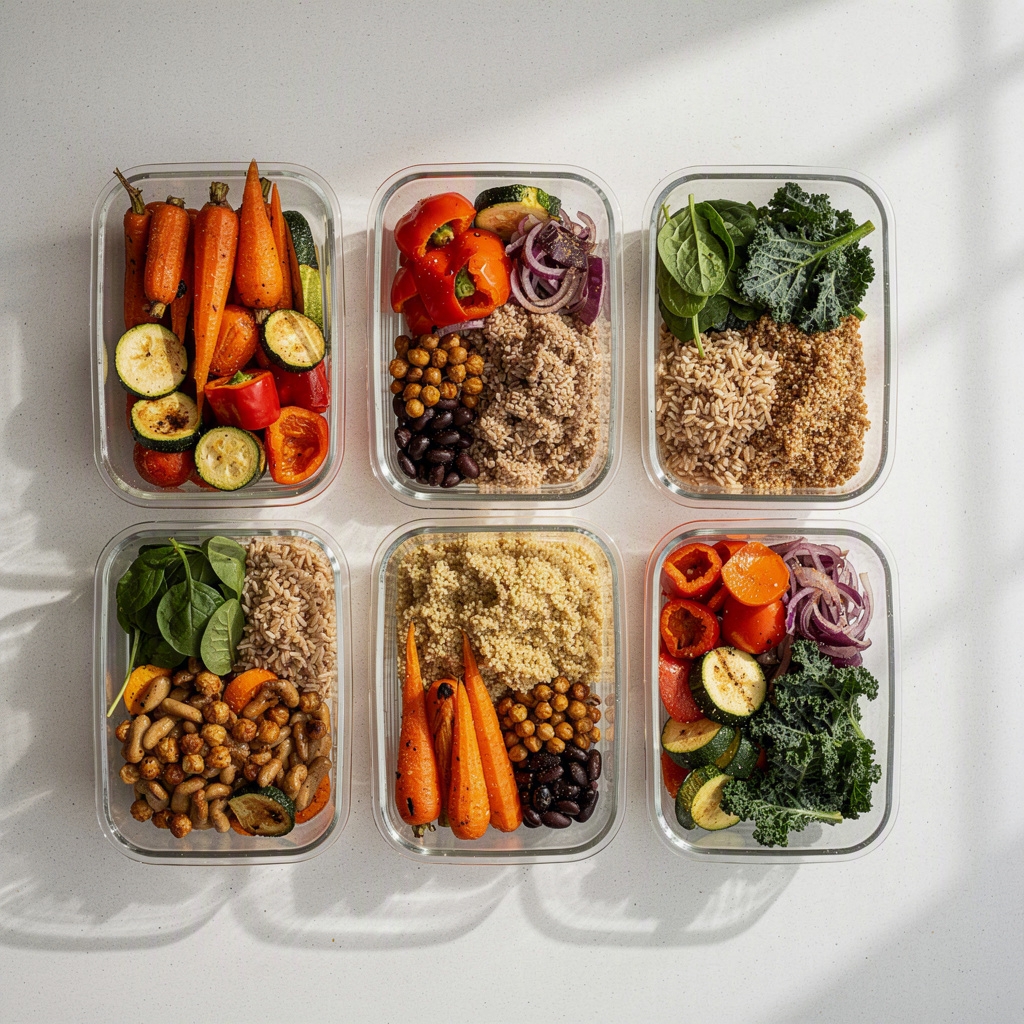
Meal planning helps you eat well even on your busiest days, and it quietly supports steady blood sugar by keeping balanced food within reach. Whether you've never tried it or tried and stalled, here are five strategies to make it click.
1. Vary it up with spices and new flavors
Bland meal prep is the fastest way to quit. Keep it interesting by leaning on seasonal produce, rotating your proteins (try tofu, tempeh, lentils, or beans alongside the usual), and swapping in grains like quinoa, farro, or barley. Most of all, play with spices and herbs — cumin, turmeric, cinnamon, smoked paprika, ginger, basil, cilantro, rosemary. If you're not sure what you'll love, prep food unseasoned and add flavors as you assemble each meal.
2. Aim for the right proportions
Sometimes the food is great but the plate is lopsided — heavy on protein, light on produce. Instead of obsessing over portion sizes, think proportions: fill 75% or more of your container with plant-based foods, which are rich in the fiber that slows sugar absorption. Add a thumb-sized portion of healthy fat — pepitas, avocado, or a little olive oil. Plant-based doesn't mean only salads, either: peanut butter with berries, quinoa-and-kale salad with pistachios, or chia pudding all count.
3. Plan your snacks
Snacks are often where good intentions slip — but planned snacks do the opposite. They provide energy between meals, curb hunger, and prevent overeating later. Aim for two or three a day built from nutrient-dense foods: whole fruit with nuts or nut butter, veggies with hummus or guacamole, edamame, air-popped popcorn, or trail mix. Prep them alongside your meals so something good is always within reach.
4. Be realistic
Build your plan around your real schedule, cooking skills, and tastes. Keep a few simple go-to recipes for busy nights, lean on tools like a slow cooker or sheet-pan meals, and add a "leftovers night" to cut waste. Leave a couple of nights open for takeout or dining out — a plan with no wiggle room is a plan you'll abandon the first time life shifts.
5. Prep your ingredients
A couple of hours one day a week makes the rest of the week easy. Roast a big batch of vegetables, double up on grains and proteins and freeze the extra, and store everything in containers you can quickly assemble into meals. No time for full prep? Start with just snacks or lunches — partial prep still pays off.
Make it stick
Forget perfection and focus on small, consistent improvements. Start with prepping just your favorite snack, and make it social — inviting family or friends to cook together turns a chore into something to look forward to.
Let AIM help you take the first step
Our AI-powered meal planner does the planning for you, building a personalized week of whole-food meals around your goals.
Build my meal plan